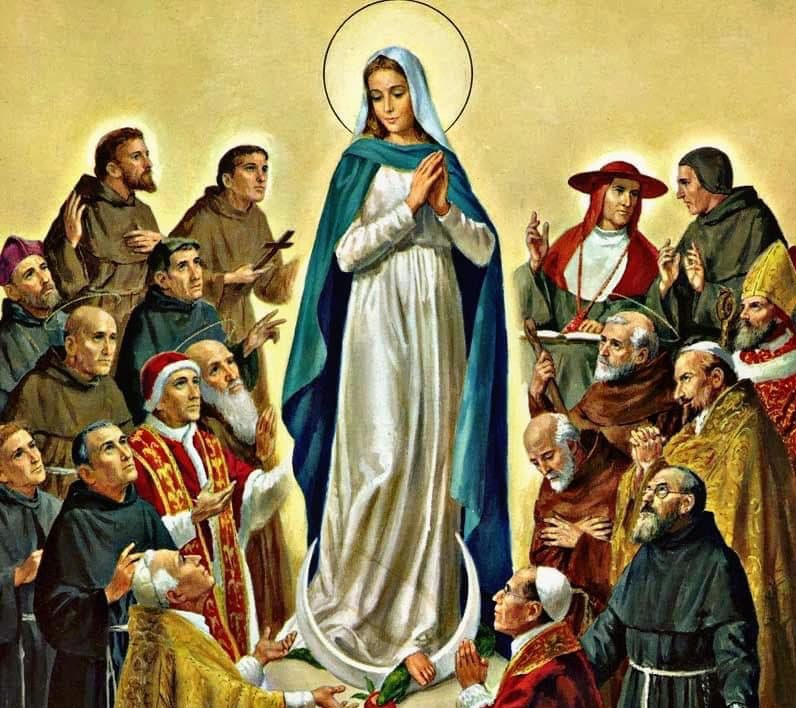
I’ve been wanting to write this particular blog for some time. With the Christmas season bringing to focus the Birth of Christ and by extension His Mother, it seems fitting for me to address an aspect of Mary that has always been embraced by Apostolic Christianity but many today find unbiblical; Her roll as Mother and Intercessor to the church.
I am truly thrilled to share this information with you. It has utterly transformed me and my prayer life. It is my prayer that after reading this you will understand a couple key things.
- Mary’s roll as a powerful intercessor is deeply rooted in the Old Testament and Jewish tradition, not paganism.
- The intercession of the saints is biblical and by extension Mary’s.
- The early church understood these truths hence the written and archeological evidence showing the church sought the intercession of both Mary and the church triumphant (Saints in heaven) from the beginning of Christianity.
A short preface before we begin:
I began to do extensive research on Catholicism in 2023. After all, since leaving Catholicism at the age of 17 a lot had changed in my life. I graduated college with a bachelors degree in religious studies, became a worship pastor, studied apologetics for years taking online classes learning how to defend the faith, and furthered my knowledge over two decades reading hundreds of books on Jesus, Christianity, biblical archeology, and beyond.
But when it came to my knowledge on Catholicism, all I knew was what fellow Protestants told me. I knew almost nothing about what Catholics actually believed about themselves or the evidence they claimed supported those beliefs. I knew if I was going to be fair in my assessment, I would need to read, study, and speak to those who were experts in the faith, and compare what I learned with what I had been told.
After almost two years of research I came to the conclusion that I was wrong about many things, especially all the typical Protestant talking points about Mary; in particular, her roll as an intercessor for the church, and I would like to share this information with you now.
May the words of Christ echo in your mind as we proceed.
“He who has ears, let them hear!” (Mark 4:9)
We must first begin with Jesus and the idea of Old Testament characters prefiguring New Testament ones. What does that mean exactly? In the Bible to prefigure means to be an early sign or type that foreshadows a later, more significant New Testament person, event, or thing.
For example, Jesus is often referred to as the new Adam (Romans 5:12-21; 1 Cor. 15:45). This comparison highlights that just as humanity inherited a fallen state through Adam’s disobedience, they also receive a new redeemed life through the obedience of Jesus.
Also, many scholars point out that Moses is a prefigurement of Jesus. Matthew’s gospel draws numerous parallels between the lives of Moses and Jesus, including their miraculous births (Moses being saved from the river, Jesus from Herod), their wilderness experiences, and their roles as deliverers. Matthew’s gospel structures Jesus’ teachings into five discourses, mirroring the five books of the Pentateuch. This further reinforces the idea of Jesus as a new Moses, a new lawgiver.
Lastly, Jonah is seen as a prefigurement of Jesus, drawing from the parallel of Jonah in the belly of the fish in the depths of the sea for 3 days only to rise again on the third day like Jesus in the tomb. Jesus when asked to give a sign even stated that the only sign He would give is the sign of Jonah. (Matt. 12:38-42)
None of these statements are radical ideas and I know of no Christian denomination that opposes them.
Jesus, however, isn’t the only New Testament figure that has an Old Testament counter part.
Mary since the beginning of the Church has been referred to as the new Eve. If you remember the story of the fall in Genesis you will recall God’s curse upon the serpent where He proclaims that one day a woman will come whose seed will crush the serpent’s head. This has been seen as a prophecy of the Messiah Jesus, and by extension, a reference to Mary as the woman who would bring Him forth. This Old Testament proclamation has often been referred to as the Proto-evangelium: the first prophecy of salvation. (Gen. 3:15)
Here is a quote from one of our Early Church Fathers on Mary as the new Eve
“…the knot of Eve’s disobedience was untied by Mary’s obedience. For what the virgin Eve tied by her unbelief, this Mary untied by her belief…Thus the deception by which the virgin Eve, who was already wedded to a man, was wickedly deceived, was destroyed through the truth, by which the Virgin Mary, who was already wedded to a man, was brought the good news by the angel. For just as the former was deceived by the angel’s word, so that she fled from God upon having transgressed His word, so the latter, too, was brought the good news by an angel’s word, that she might bear God upon being obedient to His word. And as the former was deceived to disobey God, so the latter, too, was persuaded to obey God, in order that the Virgin Mary might become the advocate of the virgin Eve. And just as the human race was put in bonds to death through a virgin, it was loosed through a virgin. (Against Heresies 3.21-5.19 Irenaeus of Lyons 180 A.D.)”
Further still here is what New Testament scholar Raymond Brown states about the woman in Genesis 3.
“John thinks of Mary against the backdrop of Genesis 3…Mary is the New Eve.” (The Gospel according to John 2 vols.; Anchor Bible 29-29a. Raymond Brown)
What most people don’t realize is that there is another Old Testament prefigurement of Mary. One that you might have read dozens of times without realizing its significance. But before we can get to this Old Testament counter part to Mary, one more prefigurement of Jesus must be unpacked. Jesus as the new Joseph.
Have you ever stopped to think about how incredibly similar the life of Jospeh in the Old Testament is to that of Jesus. Consider the following comparisons.
| The Life of Joseph | The Life of Jesus |
| Joseph is the firstborn son of Rachel and the beloved son of Jacob. (Gen. 30:22-24, 37:3) | Jesus is the firstborn son of Mary and the beloved Son of God. (Matt. 1:25, 3:17) |
| Joseph is sold to the Gentiles for twenty silver pieces by Judah, one of the twelve brothers. (Gen. 37:23-36) | Jesus is sold to the Gentiles for thirty silver pieces by Judas, one of the twelve disciples. (Matt. 26:15,30) |
| Joseph is with two condemned men (cupbearer and baker), one of whom is pardoned and given physical life. (Gen. 40:1-23) | Jesus is with two condemned men, one of whom is forgiven by Jesus and given everlasting life. (Luke 23:32, 39-43) |
| Joseph is “thirty years old” when he enters Pharaoh’s service. (Gen. 41:46) | Jesus is “thirty years old” when he begins his ministry. (Luke 3:23) |
| Joseph is exalted to the right hand of Pharaoh, rules over the kingdom of Egypt. (Gen. 41:40-44) | Jesus is exalted to the right hand of God, rules over the kingdom of heaven. (Acts 2:32-33) |
| Joseph saves Israel and the Gentiles from death and feeds them life-giving wheat. (Gen. 41:55-57) | Jesus saves Israel and the Gentiles from spiritual death and feeds them eternal life-giving bread. (John 6) |
| Jospeh gives special honor to Benjamin the Beloved, youngest of the twelve, at the banquet. (Gen. 43:33-34) | Jesus gives special honor to John the Beloved Disciple, youngest of the twelve, at the Last Supper. (John 13:23) |
| Jospeh is revealed to his brothers, who do not recognize him at first, after he is exalted to the throne of Egypt. (Gen. 42:8) | Jesus is revealed to his disciples, who do not recognize him at first, after he is raised from the dead. (Luke 24) |
Wow, coincidence, I don’t think so. Ancient Christians were well aware of this parallel. Consider the Persian Christian writer Aphrahat the Sage who wrote an entire explanation of how, in the Old Testament, “Jospeh who was persecuted was a type of the persecuted Jesus” (Demonstrations 21.9, Aphrahat the Sage, 336 A.D.) Modern Scholars like Gary Anderson also make this comparison in his book, “The Christian Doctrine and the Old Testament.”
With all this in mind we now come to one of the most striking prefigurements of Mary in the Old Testament and the main point of this blog:
Mary as the new Rachel and thus the new mother who intercedes for her children, in this case, her new spiritual children, the Church.
Calling to mind the story in Genesis, Rachel is the adored wife of Jacob, who is the father of the twelve tribes of Israel (Genesis 29:28-30). Jacob is tricked into marrying Rachel’s older sister Leah first, only to work for his father-in-law another 7 years to wed Rachel. Between the two sisters and their maidservants they give Jacob 12 sons who would become the 12 tribes of Israel.
The two sons Rachel gives Jacob are Jospeh who gets sold into slavery and eventually ends up second in command to Pharaoh in Egypt, and Benjamin his younger brother who during his delivery causes great suffering and pain to Rachel which leads to her death. With her last words she names him Ben-‘oni, (Son of my sorrow). Here is what the bible says about her death.
“Then they journeyed from Bethel; and when they were still some distance from Ephrath, Rachel travailed, and she had hard labor. And when she was in her hard labor, the midwife said to her, “Fear not; for now you will have another son.” And as her soul was departing (for she died), she called his name Benoni; but his father called his name Benjamin. So Rachel died, and she was buried on the way to Ephrath (that is, Bethlehem), and Jacob set up a pillar upon her grave; it is the pillar of Rachel’s tomb, which is there to this day. (Gen. 35:16-20)
Moving on, this Old Testament story about Rachel’s death dates to around the 14th century B.C. Fast forward to the Babylonian exile, where the Jewish people have now lived in the promise land for centuries but now find themselves conquered and in chains being dragged to Babylon, we find this passage in the book of the prophet Jeremiah taking place right along the path where Jacob buried Rachel on the road to Bethlehem.
Thus says the LORD:
“A voice is heard in Ramah
lamentation and bitter weeping.
Rachel is weeping for her children;
she refuses to be comforted for her children,
because they are not…” (Jeremiah 31:15 NIV)
Hold on a minute. Who’s voice can be heard weeping for her children being taken into exile?
Rachel’s!
Why is this significant?
Rachel’s been dead for 800 years, the Babylonian exile occurs in 597 B.C. How can this be? It’s like those who have died in God’s favor can still see what is going on in the world!
Yes exactly.
Don’t miss this. This is a biblical example that those who have gone before us can still know what is going on with the lives of the living. WOW. If you’re like me this may be the first time you connected the dots of this passage and its significance.
Remember this passage begins with the words, “Thus says the LORD!” Not, “Thus says Jeremiah”, not, “Thus says Catholics”, but “Thus says the LORD!!!”
Getting back to Jeremiah he continues this passage with another theological bombshell regarding Rachel!
Thus says the LORD:
“A voice is heard in Ramah
lamentation and bitter weeping.
Rachel is weeping for her children;
she refuses to be comforted for her children,
because they are not…”
“…This is what the LORD says:
Restrain your voice from weeping
and your eyes from tears,
for your work will be rewarded”
Declares the LORD.
“They will return from the land of the enemy.
So there is hope for your descendants,”
declares the LORD.
“Your children will return to their own land.” (Jeremiah 31:16-17)
Your work will be rewarded?! What? Did I just hear that right?
Rachel is witnessing the exile of her people. The temple is destroyed, Jerusalem is in ruins, and Rachel is unconsolably crying out to God. Hearing this, God tells Rachel who hasn’t been alive in 800 years that her work will be rewarded and because of her intercession God makes a promise that her children will one day return to their own land!?
Did I just read biblical evidence for the intercession of the dead on behalf of the living?
A belief that Catholics and Orthodox Christians have believed since the beginning of Christianity?!
Yes. Read it again. Google the timeline between Rachel’s death and the Babylonian exile, it’s been almost a millennium.
Not only that, but it’s important to note God refers to Rachel’s descendants as, “her children.” God is declaring that Rachel is not just the mother of Jospeh and Benjamin, but the Mother of All Israel.
And there you have it, Old Testament evidence, biblical evidence, that our work as followers of God does not end when we die. Not only will we know what is going on with the living, but our intercession can cause God to act. And in this case, God hears the weeping of Rachel the Mother of all Israel and her intercession is not only heard but answered.
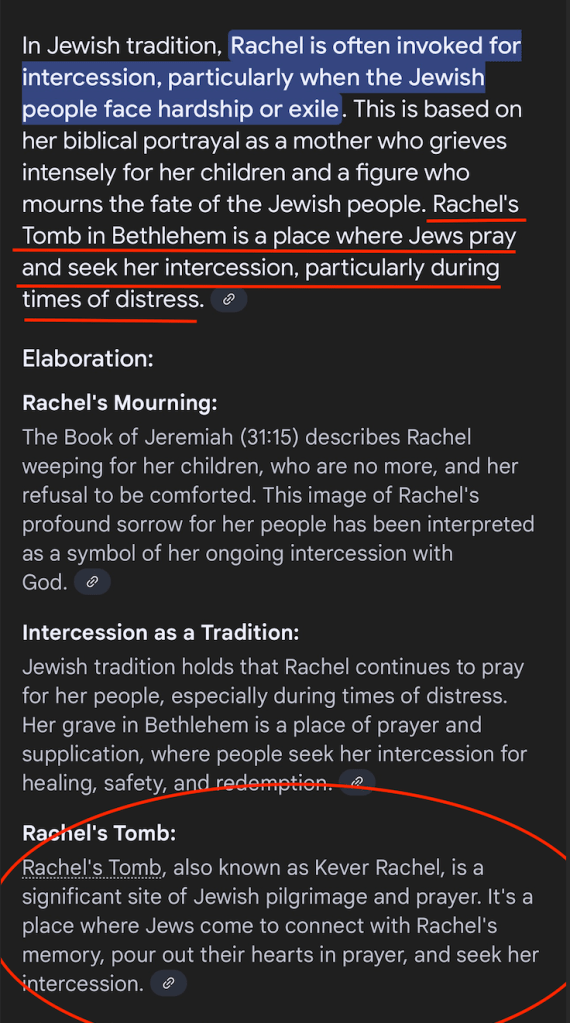
You might think all this is just being read into the text, but all one has to do is google search “Jewish tradition of Rachel’s intercession” and prepare to be amazed. Here’s what you’ll find.
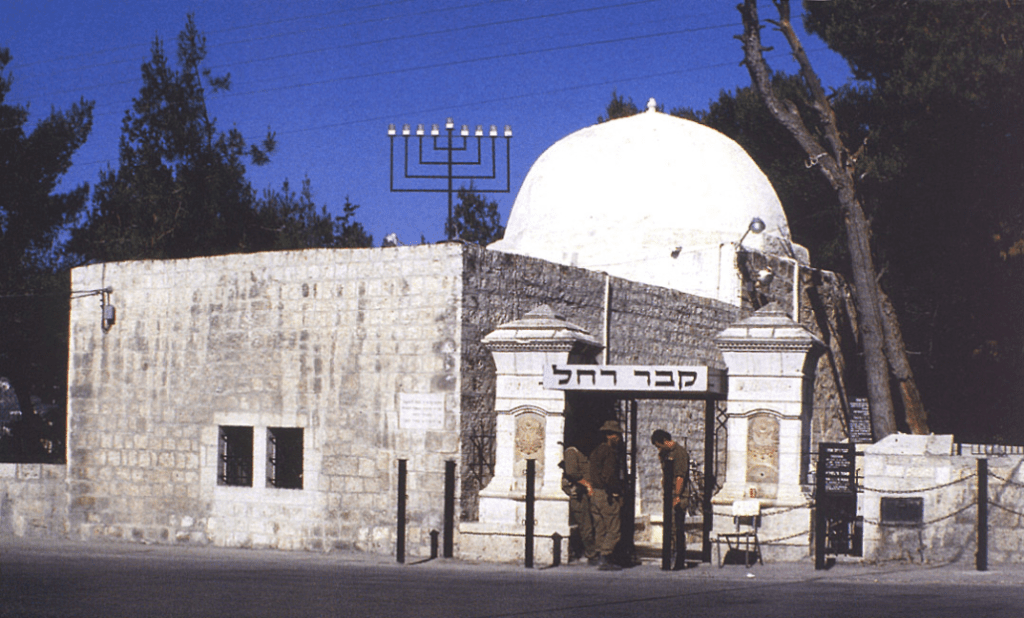
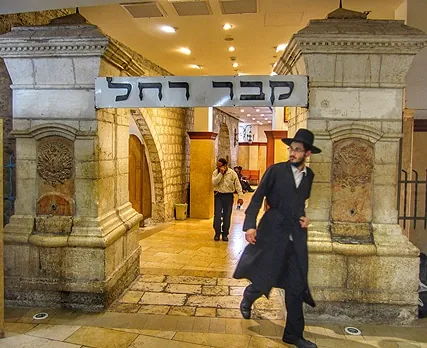
Here is a photo of what Rachel’s tomb looks like today from the out side.
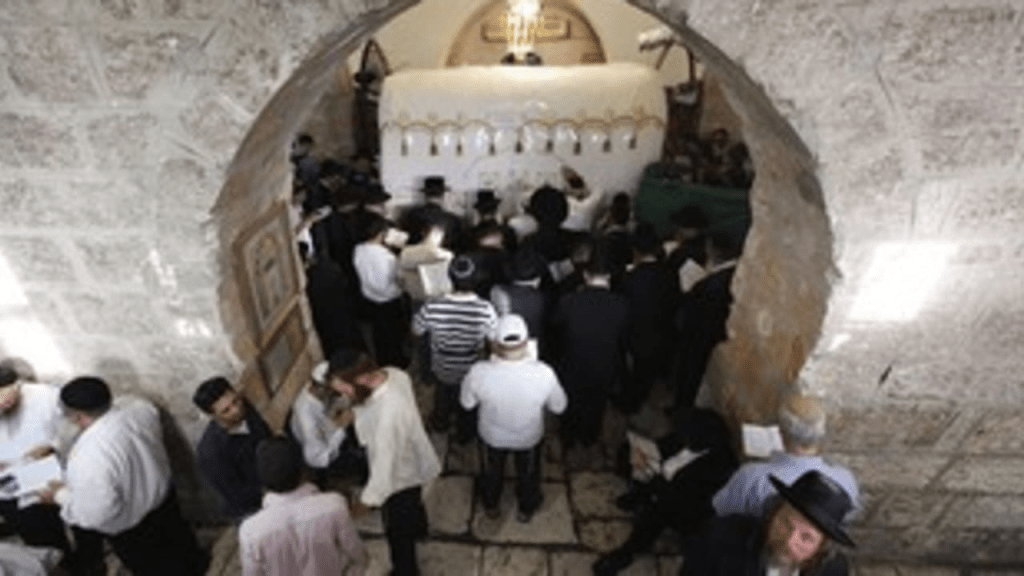
Bellow is a picture of women gathered inside Rachel’s tomb in front of the pillar Jacob erected praying and seeking her intercession.
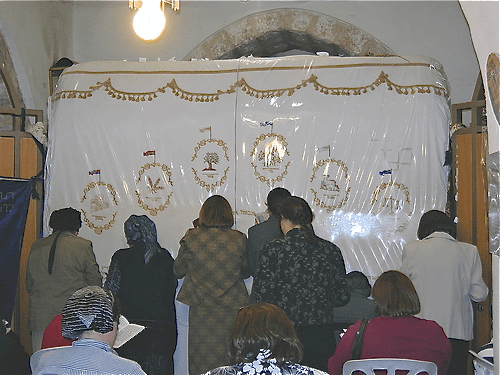
More people gathered praying to Rachel the Matriarch of all Israel.
The words of Old Testament scholar Brant Pitre sums it up like this,
“Although Rachel may not be the most well-known woman of the Old Testament in contemporary Christian circles, the same thing was not true in ancient Judaism. As the wife of Jacob/Israel himself, Rachel was regarded in a special way as the sorrowful mother of all Israel, whose special role was to pray for and intercede on behalf of her children, even though she was no longer here on earth…” (Jesus and the Jewish roots of Mary, Brant Pitre; pg 169)
WOW Incredible. Rachel’s intercession has been sought after in prayer even to this day!? WHAT! All of this may come as a shock to you, it was for me. How come no one ever told me about this? How did I miss this when reading the Bible? Why didn’t we know? For one, the majority of us in the West are Gentile Christians. We are so far removed from the Jewishness of Christianity and the early Christians, many of us have lost sight of what we’ve inherited prior to the Reformation.
I personally think this information about Rachel is a really big deal. Our Jewish friends for thousands of years showed the world a different kind of religion. A religion of monotheism, the belief that there is only One true God. And yet, these protectors of monotheism see no competition between the worship of Yahweh and seeking the intercession of Rachel the Mother of all Israel. They don’t claim to worship Rachel, and don’t think that in asking for her intercession they are committing idolatry, a sin they take incredibly seriously.
This is the tradition of intercession Christianity inherited. In much the same way, Catholics and Orthodox Christians do not worship Mary or any Saint simply because they seek their intercession. Just as Rachel interceded on behalf of the children of Israel and God answered her prayers, so too Catholics and Orthodox Christians ask Mary and the Saints to pray for them, that their perfect prayers before God would be answered.
If Mary is the new Rachel, just like Jesus is the new Joseph from the Old Testament, that means we the Church have a spiritual Mother that God has given to us, who intercedes for her children. We too can seek her intercession like the church has done since the beginning.
Like many Evangelical Christians I found this hard to fathom and even harder to put into practice. Scared that I’d be committing a grave sin against God, everything in my bones fought against believing this could be true, but the evidence and historical precedence were overwhelming. So after praying to God to have mercy on me if I sinned, I decided to put this ancient Christian practice to the test.
As a Christian we are commanded by God to love our enemies and pray for those who persecute us. We are called to harbor no hatred or animosity toward anyone in our heart. Having been repeatedly bullied, manipulated, and emotionally abused by someone in my life over the span of years, to say I found it hard to forgive and love them would be an understatement. I tried my hardest to take the high road time and again but made no headway. I strived as a Christian to pray, forgive, and love, but when gatherings would bring us together, their unremorseful countenance got the best of me.
So, for the first time since leaving Catholicism 25+ years ago, I asked Mary to pray for me. I told her that I have tried to be forgiving, I have tried to love this person, but I have wounds so deep any progress I make seems to vanish in their presence. If asking for your intercession is true, I said, then please pray for me Mary, pray that God will take this bitterness from my heart and give me the capacity to love them.
You won’t believe what happened next. I went to bed that night and fell into a deep sleep. All night long I had dreams of this person but everything we did in every dream sequence I dreamt was of us having so much fun. One minute we are at the beach having a great time together, the next dream we are at a sporting event cheering on a team and having such a good time, still the next dream sequence we are by a fire pit deep in conversation bonding and growing close. This happened all night.
The next morning I woke up so happy. It was as if God was showing me the redeemed side of this person. From that morning on my bitterness and animosity was purged. Instead of feeling disdain in their presence, I felt sympathy and love. When I realized my heart had been transformed I was speechless. I couldn’t deny the spiritual work that had just occurred and how I got there. Truly the prayers of our Spiritual Mother were answered and as a result, my own.
This is the kind of blessing God has ordained for us to experience through the ongoing communion with Mary and the Saints.
“If Mary is truly the mother of all disciples, then there is no reason to think she abandons her maternal relationship with the Church on earth just because her earthly life comes to and end” (Jesus and the Jewish roots of Mary, Brant Pitre; pg 181)
We don’t cease to be apart of the Body of Christ simply because our bodies die. For those who endure to the end and win the crown Paul describes in the New Testament, we are privileged to join the great cloud of witnesses and become glorified soldiers for Christ, praying against the forces of evil on behalf of the rest of the church.
I pray that you too, will experience and utilize this wonderful spiritual tool God has given to us, to aide in our sanctification and to help us in combating evil.
Continuing on, there is one last figure from the Old Testament that must be addressed, one that sent chills down my spine when discovering. Benjamin, the younger brother of Joseph and second son of Rachel.
As I stated earlier Rachel had two sons, Jospeh who was sold into slavery and becomes Pharaoh’s right hand man, and Benjamin Rachel’s second son who she initially names Ben’oni, (Son of my sorrow) because she dies giving birth to him.
Not only does Joseph foreshadow Jesus, but Benjamin prefigures the Apostle John in the New Testament.
Ever wonder why John is called the Beloved Disciple? After all, calling yourself the Beloved Disciple seems kind of arrogant. Didn’t Christ love all His disciples showing no favoritism? Well, John was called the Beloved, but not for the reasons you think. Would you be surprised to learn that Benjamin, Josephs younger brother was also called the Beloved.
Deuteronomy 33:12 describes a blessing upon Benjamin. Here is what it says.
“About Benjamin he said;
“Let the beloved of the Lord rest secure in him,
for he shields him all day long,
And the one the Lord loves rests between his shoulders.”
If this is true then we should see a parallel in their lives. Deuteronomy says that Benjamin is the beloved of the Lord and will rest secure in him and shield him all day long!
John is also the beloved of the Lord. Question, who was the only disciple that rested secure in Him and was shielded by God, dying of old age and was spared martyrdom? John the Beloved Disciple! Coincidence, I think not.
“When John in his gospel refers to himself as the beloved disciple, he’s indicating that he takes the same position amongst the twelve apostles that Benjamin once took among the twelve sons of Jacob, the beloved younger son of Rachel and brother of Joseph, in this case the adopted son of Mary and as a result, the brother of Jesus.” (Jesus and the Jewish roots of Mary; Brant Pitre pg 177)
Now let’s take a look at the biblical similarities between Rachel and Mary.
| Old Testament | New Testament |
| Rachel | Mary |
| Joseph is the firstborn son of Rachel (Gen. 30:22-24, 37:3) | Jesus is the firstborn son of Mary (Matt. 1:25, 3:17) |
| Benjamin second son of Rachel (Gen. 35:16-20) | John the second son (adopted) of Mary (John 19:26-27) |
| Benjamin Youngest of the 12 brothers of Joseph | John Youngest of the 12 disciples |
| Benjamin is called the beloved of God (Deut. 33:12) | John is called the beloved disciple (John 19:26) |
| Benjamin the one the Lord loves rests between His shoulders (Deuteronomy 33:12) | The disciple whom Jesus loves who rested upon His bosom at the last supper (John 13:23) |
| Benjamin Son of Rachel’s sorrow because she died giving birth to him (Gen. 35:16-20) | John son of Mary’s sorrow because it is through the crucifixion of Jesus that he becomes her adopted son (John 19:26-27) |
| Jews pour out their hearts in prayer and seek her intercession | Catholic and Orthodox Christians pour out their hearts in prayer and seeker her intercession |
| Rachel’s intercession is sought particularly in times of hardship and suffering | Mary’s intercession has been historically linked to times of hardship and suffering (Ryland Papyrus 470) |
| Rachel the Mother of all Israel (Jeremiah 31:16-17) | Mary the Mother of the church (Rev. 1-6; 12:17) |
Christians are not the only ones that see this parallel. Listen to Jewish scholar Jacob Neusner on how the parallels between Rachel in Judaism and Mary in Christianity makes perfect sense.
“That is why I can find in Mary a Christian, a Catholic Rachel, whose prayers count when the prayers of great men, fathers of the world, fall to the ground…No wonder that, when Rachel weeps, God listens. How hard, then, can it be for me to find in Mary that sympathetic, special friend that Catholics have known for 2,000 years! Not so hard at all. So, yes, if Rachel, then why not Mary?”(Jesus and the Jewish roots of Mary, Brant Petre, pg 183)
As I stated in the chart above, John becomes the adopted son of Mary. Let’s quickly read and unpack John’s crucifixion narrative.
When Jesus saw his mother there, and the disciple whom he loved standing nearby, he said to her, “Woman, here is your son,” and to the disciple, “Here is your mother.” From that time on, this disciple took her into his home.
(John 19:26-27 NIV)
Interesting fact I didn’t know until doing this research. Did you know that in Roman Law whatever a crucified victim proclaimed on the cross about his property and those under his legal care was considered legally binding. If a crucified victim stated he wanted his farm to pass to his brother, and his business to go to his son, it would be upheld by roman law. They could even decree who should become the legal guardian of someone in their lawful care. In light of this fact, when Jesus declares Mother behold your son, son behold your mother to Mary and John, under roman law John is now the adopted son of Mary, and Mary the adopted mother to John. (Craig Keener, The Gospel of John, 2:1444)
This seals the parallel between Rachel and Mary. Now Mary has two sons and like Rachel the youngest is known as the Beloved.
You might be thinking at this point, “doesn’t the Bible say Jesus had brothers and sisters?” Well, not according to the Protestant Reformers. Without getting into to much detail since this particular topic on the perpetual virginity of Mary warrants its own blog post, it’s worth noting here that none, that’s right, none of the major Protestant Reformers believed Mary had other biological children. They all used scripture to back this belief and went to their graves defending the perpetual virginity of Mary. Martin Luther, John Calvin, Ulrich Zwingli, and later even John Wesley all taught and believed that Jesus was the only biological Son of Mary. One could make the case that Protestant theology has strayed away from its original roots on this issue.
Here are some quotes from the early Reformers to make my point.
Martin Luther
“Christ . . . was the only Son of Mary, and the Virgin Mary bore no children besides Him . . . I am inclined to agree with those who declare that ‘brothers’ really mean ‘cousins’ here, for Holy Writ and the Jews always call cousins brothers.” (Pelikan, ibid., v.22:214-15 / Sermons on John, chaps. 1-4 (1539))
===
John Calvin
“Certainly, it is said that he did not know the Virgin until she gave birth to her first Son. By this, the Evangelist means to signify that Joseph did not take his wife to live with him, but in obedience to God and to discharge his duty towards him. It was not then to be carnal love …”
(“Tome 46” of the Corpus Reformatorum “Sermon 22” on the Harmony of the Gospels (from 1562))
“This is fully consistent with the opinion commonly held, that Alpheus or Cleopas was the husband of the sister of Mary, the mother of our Lord, and consequently that James, the son of Alpheus, was our Lord’s cousin.”
(Commentary on Galatians 1:19, John Calvin)
===
Ulrich Zwingli
“I firmly believe that Mary, according to the words of the gospel as a pure Virgin brought forth for us the Son of God and in childbirth and after childbirth forever remained a pure, intact Virgin.
(Zwingli Opera, Corpus Reformatorum, Berlin, 1905, v. 1, p. 424.)
===
John Wesley
““I believe that he [Jesus] was made man, joining the human nature with the divine in one person; being conceived by the singular operation of the Holy Ghost, and born of the blessed Virgin Mary, who, as well after as before she brought him forth, continued a pure and unspotted virgin.”
(John Wesley, Letter to a Roman Catholic A.D. 1749)
The facts are overwhelming. Not only did the early church believe and teach the perpetual virginity of Mary, but even after the Reformation so did its leaders. These men are no longer under the authority of the Catholic Church, they do not have to believe anything they think is unbiblical, and yet all of these men continued to propagate the belief of the perpetual virginity of Mary, and teach it to their respective congregations.
To believe Jesus had biological siblings and thus Mary not be an Ever-virgin, is to hold a minority view and a modern invention at that.
If Mary is the new Rachel and thus the new intercessor for the church and our Mother, what evidence do we have that this is how the earliest Christians viewed her. Remember our Jewish friends sought the intercession of Rachel particularly in times of distress for healing, safety and protection from their enemies.
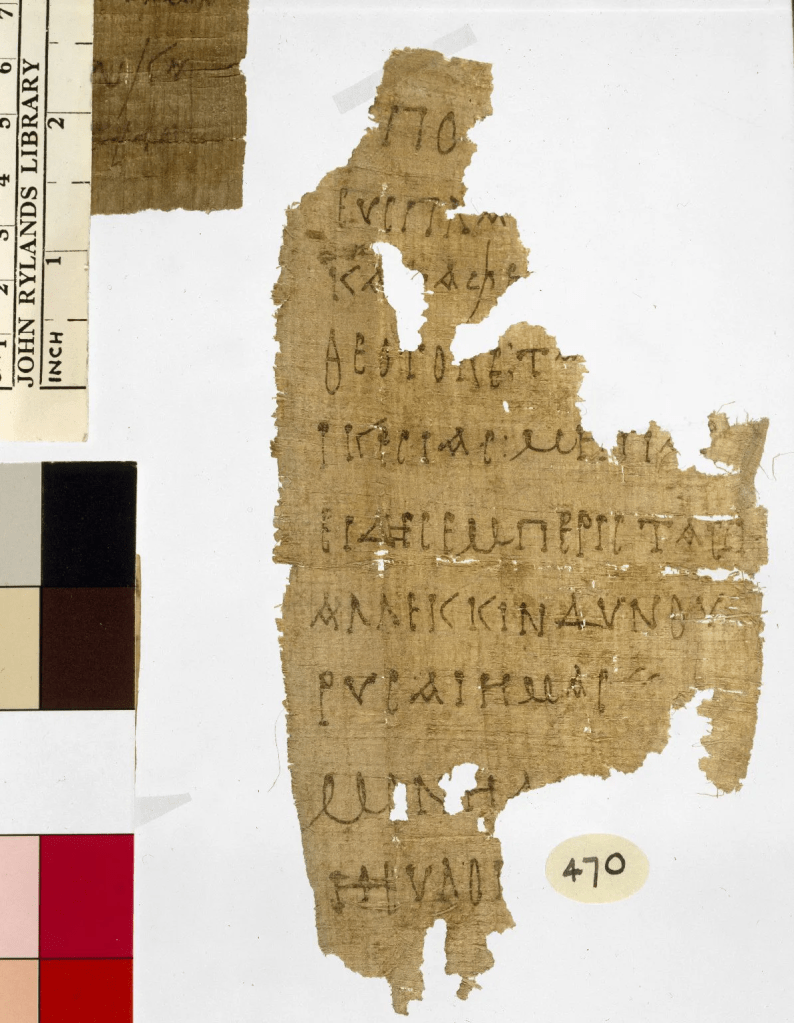
Here is the earliest known papyrus that mentions Mary. It’s called the Ryland Papyrus 470 and titled “Sub Tuum Praesidium (Under Your Protection). It dates to around 250 A.D. and predates the ecumenical council of Ephesus 431 A.D. which made Mary a dogma of the faith.
So what does this early script say? Remember no dogma of Mary has yet to be defined by the church, and Christianity is in the thick of persecution. We are still 75 years away from being made legal in the Roman empire, and further still before Christianity becomes the official religion of Rome.
Here’s what is says…
Mother of God (hear) my supplications: suffer us not (to be) in adversity, but deliver us from danger
Here are other examples of early writings about the intercession of Mary and Christians who have gone to be with the Lord.
Jerome
“You say in your book that while we live we are able to pray for each other, but afterwards when we have died, the prayer of no person for another can be heard. . . . But if the apostles and martyrs while still in the body can pray for others, at a time when they ought still be solicitous about themselves, how much more will they do so after their crowns, victories, and triumphs?” (Against Vigilantius 6 [A.D. 406]).
Augustine
“A Christian people celebrates together in religious solemnity the memorials of the martyrs, both to encourage their being imitated and so that it can share in their merits and be aided by their prayers” (Against Faustus the Manichean [A.D. 400]).
“At the Lord’s table we do not commemorate martyrs in the same way that we do others who rest in peace so as to pray for them, but rather that they may pray for us that we may follow in their footsteps” (Homilies on John 84 [A.D. 416]).
“Neither are the souls of the pious dead separated from the Church which even now is the kingdom of Christ. Otherwise there would be no remembrance of them at the altar of God in the communication of the Body of Christ” (The City of God 20:9:2 [A.D. 419]).
Hermas
“[The Shepherd said:] ‘But those who are weak and slothful in prayer, hesitate to ask anything from the Lord; but the Lord is full of compassion, and gives without fail to all who ask him. But you, [Hermas,] having been strengthened by the holy angel [you saw], and having obtained from him such intercession, and not being slothful, why do not you ask of the Lord understanding, and receive it from him?’” (The Shepherd 3:5:4 [A.D. 80]).
Clement of Alexandria
“In this way is he [the true Christian] always pure for prayer. He also prays in the society of angels, as being already of angelic rank, and he is never out of their holy keeping; and though he pray alone, he has the choir of the saints standing with him [in prayer]” (Miscellanies 7:12 [A.D. 208]).
Origen
“But not the high priest [Christ] alone prays for those who pray sincerely, but also the angels . . . as also the souls of the saints who have already fallen asleep” (Prayer 11 [A.D. 233]).
Cyprian of Carthage
“Let us remember one another in concord and unanimity. Let us on both sides [of death] always pray for one another. Let us relieve burdens and afflictions by mutual love, that if one of us, by the swiftness of divine condescension, shall go hence first, our love may continue in the presence of the Lord, and our prayers for our brethren and sisters not cease in the presence of the Father’s mercy” (Letters 56[60]:5 [A.D. 253]).
Anonymous
“Atticus, sleep in peace, secure in your safety, and pray anxiously for our sins” (funerary inscription near St. Sabina’s in Rome [A.D. 300]).
“Pray for your parents, Matronata Matrona. She lived one year, fifty-two days” (ibid.).
Methodius
“Hail to you for ever, Virgin Mother of God, our unceasing joy, for to you do I turn again. . . . Hail, you treasure of the love of God. Hail, you fount of the Son’s love for man” (Oration on Simeon and Anna 14 [A.D. 305]).
“Therefore, we pray [ask] you, the most excellent among women, who glories in the confidence of your maternal honors, that you would unceasingly keep us in remembrance. O holy Mother of God, remember us, I say, who make our boast in you, and who in august hymns celebrate the memory, which will ever live, and never fade away” (ibid.).
“And you also, O honored and venerable Simeon, you earliest host of our holy religion, and teacher of the resurrection of the faithful, do be our patron and advocate with that Savior God, whom you were deemed worthy to receive into your arms. We, together with you, sing our praises to Christ, who has the power of life and death, saying, ‘You are the true Light, proceeding from the true Light; the true God, begotten of the true God’” (ibid.).
Cyril of Jerusalem
“Then [during the Eucharistic prayer] we make mention also of those who have already fallen asleep: first, the patriarchs, prophets, apostles, and martyrs, that through their prayers and supplications God would receive our petition” (Catechetical Lectures 23:9 [A.D. 350]).
It is my prayer, in light of all this biblical and historical evidence, that you, this Christmas season, would take the opportunity to see Mary as much more than just another figure in the nativity. Indeed Mary is not just the Mother of Christ the Savior, but our Holy Mother too. A Mother who continues to go before the Lord on our behalf.
Jesus doesn’t just give His Mother to John, but Revelation 1-6; 12:17 proclaims that the Mother of Christ is also the Mother of the Church.
Like Rachel before her, Mary continues to pray for her children. Our great and powerful God doesn’t need anyone to stand in the gap for us, and yet throughout history He has chosen to graciously let us participate in His amazing story of love and redemption.
Early Christians saw this Old Testament connection between Mary and Rachel and so do Jewish scholars.
Our Jewish friends as they have for thousands of years, continue to honor and seek the intercession of their mother Rachel in much the same way Catholic and Orthodox christians do for Mary as her New Testament counterpart.
Just as God answered the prayers of an inconsolable mother who had been dead for 800 years yet witnessed the enslavement of her descendants; so too, does our Holy Mother go before the Lord in prayer and supplication because we the Church are her children and she loves us.
If you believe the Bible is the Word of God, then you believe in the Intercession of the Saints. You just didn’t realize it until today!
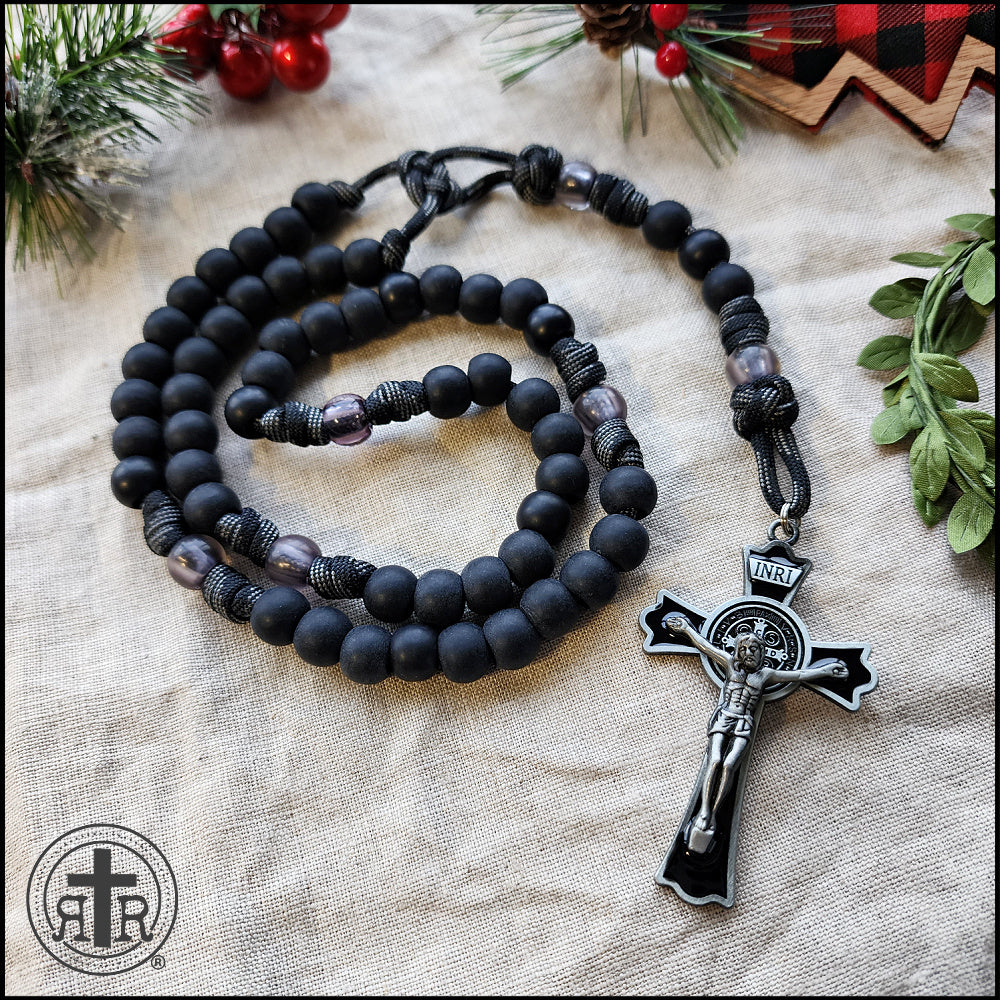
And if Mary is indeed the new Rachel, then a tool that was developed by ancient Christians to aid in seeking her intercession, I hope is starting to make a lot more sense. But that is a story for another day.

Leave a comment