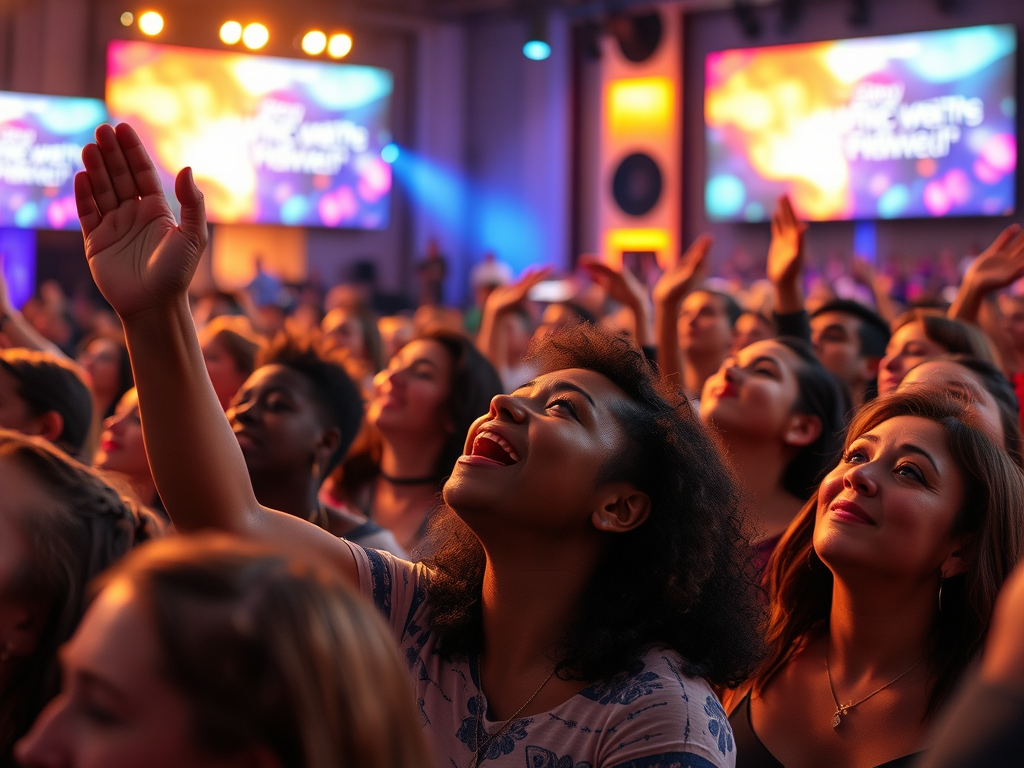
Hello family and friends. No this isn’t a prank, and yes, you read the title correctly. I have chosen to go back to the Catholic Church. No, it isn’t just because I was raised Catholic, though, there is some truth in that statement. No, I haven’t been brainwashed or misled. And no, it isn’t because I have somehow backslidden in faith and am now in need of being re-evangelized. In fact, quite the opposite. I am more alive in Christ now, than ever before.
I wasn’t seeking to become Catholic. In fact, if you were to tell me in late 2023 before this investigative journey began, that I would one day become Catholic again, I would have laughed in your face. After all, there are so many beliefs in Catholicism that are clearly false and, as my Protestant brothers would say are, “unbiblical”, right? Maybe at some point in history Catholicism WAS true, but then it became corrupt and the need to reform the church was necessary, right? And now that the church has been reformed in what we know as the Protestant Reformation, WE Protestants are the church as it should have been; the church as it was early on before it was tainted by Constantine, and by paganism, and unbiblical beliefs like baptismal regeneration, confessing sins to a priest, baptizing babies, and the misinterpretation of Peter being the rock Christ spoke about in the scriptures, right?
I once thought all these things. I once thought in all sincerity and piety as I was taught by many of the pastors who shepherded me either directly or indirectly by their preaching, that all of the aforementioned statements I made were indeed true and Catholic beliefs false…..Though I will qualify this last statement by saying that many pastors of no fault of their own have not been taught about the earliest writings of the church in their seminaries, and thus in good faith preach what they know to be true. (An example that comes to mind is the famous Pastor Francis Chan who recently began reading the early writings of the church, and like me, was shocked to learn that everyone believed in the real presence of Christ in the Eucharist until the 16th Century.)
Thus you’ve heard many of the typical talking points my protestant friends have made in the last 500 years. “Baptism is just symbolic,”; “there is no need to go to anyone but God alone in your prayers to receive forgiveness of your sins,”; “the only authority on earth we need as Christians is the Bible.” Though on that last point, I have yet to find that very statement or sentiment in the Bible itself.
This leads me to the writings of the early church. My longing as a Christian to faithfully live a Christian life as the early Christians did, was always something I thought about in my walk with Christ. Though, up until 2023, I knew almost nothing about the early church. After all, Isn’t that ultimately what every Christian on earth strives to do whether Protestant, Catholic or Orthodox; to successfully live out the Christian faith as it was ment to be, which has been passed down from the very beginning?! Thus, none of us claim a new and improved Christianity. All three of these branches claim not just that their beliefs are true, but that it’s been true from the start.
This led me to the ultimate question. Am I truly living the Christian life that was taught and practiced by the Apostles and the early church, or is my Christian life a mere modern invention that no early Christian would recognize? (Sure, many practices have evolved over the centuries, but are they a logical outflow from the early beliefs they stem from, or are their origins abrupt and not rooted in anything that came before?) Further still, am I faithfully passing on to the next generation beliefs and practices taught by the apostles, or am I propagating beliefs derived from new ways of interpreting old passages?
Faced with these questions I began to go straight to the primary sources. At the encouragement of an Anglican priest and trusted friend who was himself on a similar journey, I started at the beginning; the earliest writings after the New Testament scriptures revered by the early church for their sound teaching and apostolic roots; sure these writings are not considered scripture, but these are the earliest leaders of the faith who wrote to the same churches mentioned in the Bible. Places like Corinth and Philipi, who were facing issues that needed addressing using letters like Paul and Peter did before being martyred. It is within these writings we get clarity on biblical teaching, and insight on oral church practices that get their roots directly from the apostles. The Catholic and Orthodox churches call this Oral Tradition and is treated as sacred, just like the scriptures. After all, Paul explicitly states that not everything they commanded early churches to obey were written down.
“So then, brothers and sisters, stand firm and hold on to the traditions which you were taught, whether by word of mouth or by letter from us.”
(2 Thess. 2:15 NASB)
So what did I find. In the writings of Ignatius of Antioch I was shocked to discover that before the death of the last Apostle (John), the word “Catholic” (“katholikos in Greek), used to describe churches that get their roots from the Apostles, and those they appointed, were already in use. Ignatius again, writing before the death of the last Apostle, writes to bring clarity on the apostolic view that the Eucharist is in fact the Body and Blood of Jesus Christ, and any other view is to be seen as heretical and one not coming from the Apostles. (Early Church Fathers pg 69 David Augustine) Further still, in the letter to the Corinthians from Clemente of Rome AD 96 he affirms the Catholic teaching of Apostolic Succession when he states,
“Our Apostles also knew, through our Lord Jesus Christ, that there would be contention over the Bishop’s office. So, for this cause, having received complete foreknowledge, they appointed the above-mentioned men, and afterward gave them a permanent character, so that, as they died, other approved men should succeed to their ministry. Those, therefore, who were appointed by the Apostles or afterwards by other eminent men, with the consent of the whole Church, and who ministered blamelessly to the flock of Christ in humility, peaceable and nobly, being commended for many years by all- these men we consider are not justly deposed from their ministry. ” ( Early Church fathers pg 31 David Augustine)
These and much much more forced me to pause, regain coloration in what became pale clammy skin as my stomach churned and many realizations began taking root in my mind. The Catholic Church is not an invention of post Constantinian Christianity. The belief in the Real Presence of Christ in the Eucharist is not a later belief of a corrupt church but a core belief of the earliest Christians. The notion that each bishop today as the modern Catholic Church claims, can trace their ordination with the laying on of hands going back to the original apostles, does go back to the very beginning and not just because of one ancient source. Indeed, multiple early writings of the church attest to every belief currently held by the Catholic Church or the logical outflow thereof.
In conclusion, 3,000 pages, thousands of hours of videos, and hundreds of hours of podcasts later I would come to the realization that; I can no longer in good conscience remain protestant. Sure, there are pockets of Protestant churches that practice some of these early beliefs. Methodist baptize babies after all. But many also practice open communion for all in attendance whether they are Christian or not. Something that the early church taught against (First Apology Chapter 65-67, Justin Martyr 150 A.D.). Furthermore, other Protestant churches teach the belief in baptismal regeneration. Yet, they also teach communion as merely symbolic and not to be taken as the Real Presence of Christ in the Eucharist. But I digress.
Of course what you are getting from me today is a very very small cliff notes version of a long and slow story. No doubt there are counter arguments waiting to be drafted at the conclusion of this message. Suffice it to say, I know most of them, I spent many hours wrestling and counter arguing myself, taking each typical protestant talking point and searching to see if any of them have any real merit, if any claim against Catholicism could rightly be made. What about the corruption? What about praying to Mary? What about salvation through works? What about statues in their churches. These misinformed caricatures of Catholicism I sadly came to learn were easily refutable though their answers are longer than a sound bite, and require in some cases lengthy explanations. Answers too long to tackle here. As Yoda says in the Empire Strikes Back, “you must unlearn, what you have learned.” And for many like myself, it took a while to unsee with a protestant lens in order to view things for what they are.
Does this mean everything I did for the kingdom of God as a Protestant was a waste. Absolutely not. Does it mean I think Protestants are not Christian. Absolutely not. Does it mean I would never lead worship at a contemporary Protestant service again. Absolutely not. Nor does it mean I will never step foot in another Protestant service. On the contrary. I owe a debt I can never repay to many amazing Protestant churches, pastors, and friends. I continue to commune with them and will always see them as my fellow brothers in Christ. I will continue to support with my time, money and sweat, churches that are doing the work of Christ, coming alongside them in Christian charity to share the love of God to others by their side. It just means that as I do, I will be doing so, as their Catholic Brother in Christ.
The aim.
The ultimate aim of this platform is to inform family, friends, and the broader world, the things that I have learned. As the Bible teaches, no one takes a lamp and covers it with a jar. It is not my aim to be mean spirited or spiteful about other Christian sects not Catholic. Truly I have nothing but love for my fellow Christian brethren. Invariably there are positions I will take that are inherently antithetical to Protestantism but my tone as deliberate as I can be, will be one of peace and goodwill only wishing to inform my guests of the truths I’ve attained. I by no means am an expert on the early fathers of the church, or Catholicism. I am blessed to hold a bachelors of religion that has proven useful to me throughout my life, and my academic studies have taught me, if nothing else, how to gather information and get to the meat and potatoes of things. All I can promise, is that I will give you what I know. What I have learned. What haunted me for 2 years.
You may not become Catholic in the end. You may remain Orthodox, or Protestant. But what I hope in the least, is that you will cast aside all petty arguments against Catholicism that may sound pleasing to the ears, but hold no water. That you will be better informed on what Catholicism really is, and what it is not. There was a time where many Protestant denominations were as viscerally against each other as they were against Catholicism, but it seems at least in America, that has subsided. Hopefully the time has come where Protestant denominations will give the same curtesy to Catholics that they have given to themselves.
Luis Angel Rodriguez Jr.
Church Of The Fathers
Sources
Word on Fire: Early Church Fathers Collection. Edited by David Augustine https://a.co/d/2EkKSXC
Francis Chan. Talk on the Real Presence of Christ https://www.youtube.com/shorts/6KrFIRCSIKs
First Apology. By Justin Martyr
https://media.bloomsbury.com/rep/files/primary-source-31-justin-martyr.pdf

Leave a comment